
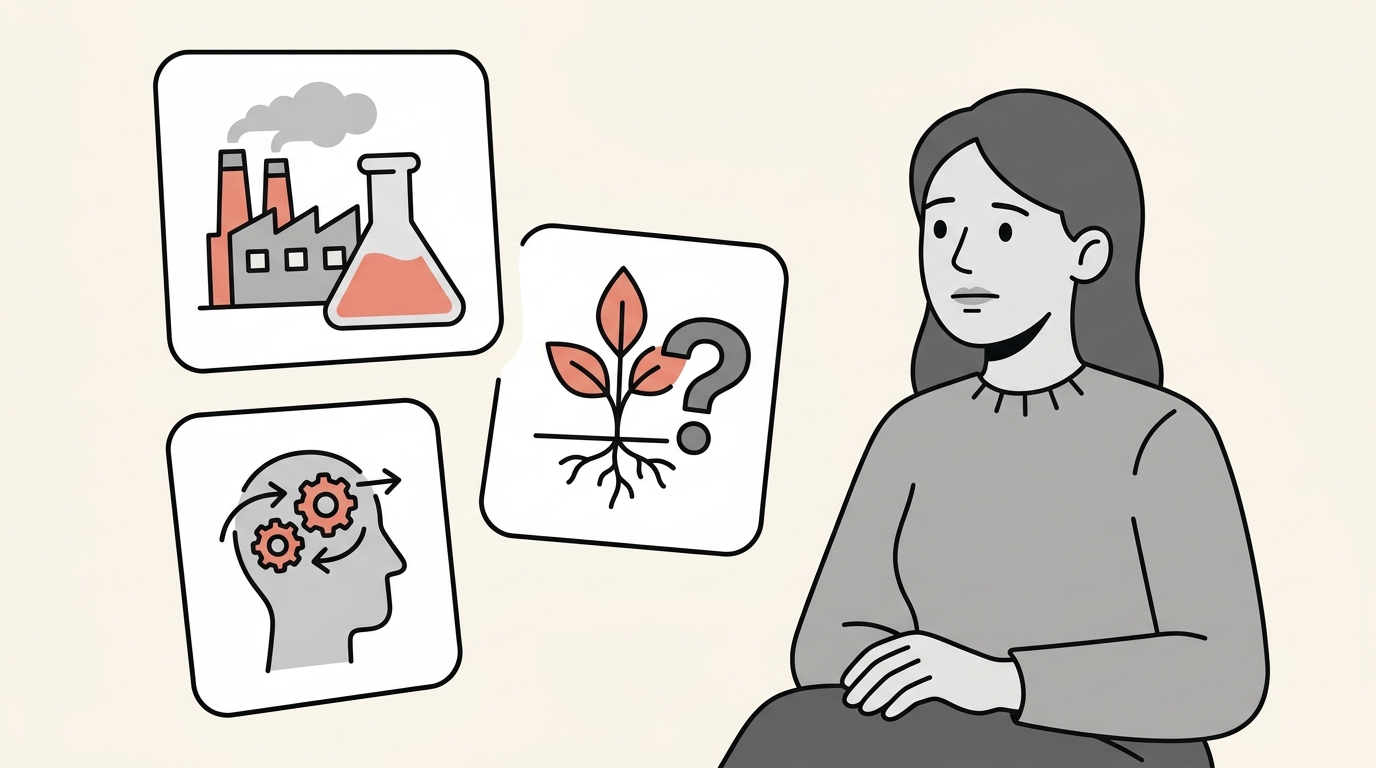
We’re taught that health comes in a box, a bottle, or a prescription pad. But what if the very skepticism we feel toward traditional plant medicine isn’t a sign of our intelligence, but a symptom of our conditioning?
I used to be the person at the back of the room with my arms crossed, radiating a distinct, heavy cloud of skepticism. I’m a “recovering” herbal medicine skeptic, or so I told myself. I believed that science belonged in sterile labs and that anything involving roots or leaves was, at best, a charming placebo and, at worst, a dangerous grift.
But then I had an uncomfortable realization. My “scientific” skepticism was not actually mine. It was a product. It was a carefully cultivated response, planted and watered by decades of corporate conditioning. I realized that my deep-seated distrust of herbalism was not based on a lack of evidence, but on a systematic erasure of knowledge that had sustained humanity for 5,000 years.
The skeptic in the room: My first visit and my initial distrust of herbalism
I’ll be honest, when I first went to see an herbalist, I didn’t believe in it.
Not really.
I went in curious, but skeptical. Guarded. Already half-convinced it wouldn’t work.
Because in my mind, if something wasn’t made in a lab, clinically packaged, and handed to me with exact dosing instructions. how could it possibly be effective?
That thought didn’t come from nowhere.
That was conditioning.
The Moment It Clicked
Sitting there, answering questions about my sleep, stress, digestion; things no doctor had ever really slowed down to ask me, I had this uncomfortable realization:
I didn’t distrust herbalism because it didn’t work.
I distrusted it because I was taught to.
Taught that “natural” meant weak.
Taught that real healing comes in bottles.
Taught that anything outside of that system was unreliable.
And yet, I had never actually questioned that belief.
What We’ve Done to Our Bodies
This is the part that’s hard to admit.
We’ve normalized taking something for everything.
Headache? Take this.
Can’t sleep? Take that.
Anxious? Here’s another option.
And over time, something subtle happens:
- The same dose doesn’t work anymore
- We need stronger versions
- We stack products on top of each other
Our bodies adapt. They build tolerance.
And instead of asking why, we just take more.
I started to realize I wasn’t supporting my body, I was overriding it.
Not listening. Just managing.
The Truth That Made Me Angry
What made me angry wasn’t just my own habits.
It was realizing how normalized this is.
We’re encouraged to:
- Silence symptoms quickly
- Keep pushing through
- Stay “functional” at all costs
But rarely are we encouraged to pause and ask:
What is my body trying to tell me?
Herbalism challenged that immediately.
Not by offering a quick fix, but by slowing everything down.
And honestly? That was frustrating at first.
Because we’ve been trained to expect instant relief.
The “Detox” We Actually Need
Let’s talk about this carefully because this word gets thrown around a lot.
I don’t mean extreme cleanses.
I don’t mean starving yourself or doing anything drastic.
I mean something much simpler and much harder:
Stepping back.
Letting your body reset from constantly reaching for quick fixes.
Becoming aware of what you’re taking and why.
Giving your system space to function without being overridden all the time.
For some people, that might mean reducing reliance on certain over-the-counter habits (safely, thoughtfully).
For others, it’s just about becoming more conscious.
But the point is this:
You can’t hear your body if you’re constantly silencing it.
My Shift in Perspective
Working with an herbalist didn’t magically fix everything overnight.
That’s not the point.
The point is, it changed how I think.
It made me realize:
- Healing isn’t always immediate
- Balance matters more than suppression
- And I had been disconnected from my own body for a long time
Herbalism didn’t feel “weak.”
It felt different.
More involved.
More personal.
More honest.
This Isn’t About Rejecting Modern Medicine
Let’s be clear, this isn’t anti-medicine.
There is absolutely a place for modern medicine. It saves lives.
But what I’m questioning is this:
Why are we so quick to trust one system blindly and dismiss another without even trying to understand it?
Why do we assume more intervention = better care?
Why do we accept building tolerance as normal?
Why aren’t we taught to work with our bodies first?
Where This Leaves Me I don’t see herbalism as a last resort anymore.
I see it as something we should have been taught from the beginning.
Not as a replacement.
But as a foundation.
Because once you start unlearning the idea that your body is a problem to fix…
you start realizing it might actually be something to listen to.
A Question Worth Sitting With
What if you’re not broken
What if you’ve just been conditioned to ignore the signals?
Modern education trains us to view plants as “weeds” or “inefficient” compared to the precision of synthetics (Source: Matthew Wood Institute of Herbalism). We’re taught that nature’s messy and unpredictable, while labs are safe and controlled. I felt that conditioning in every fiber of my being as I sat there. I was terrified of being “tricked” by someone who didn’t have a white coat. It was an uncomfortable realization to admit that I was more comfortable with a side-effect-laden prescription than a plant that humans have used for millennia.
The uncomfortable realization: Why we are conditioned to have a distrust of herbalism
The more I dug into why I felt this way, the angrier I became. We’re taught to view our health as something distant, something that must be dictated by prescriptions and institutions, when in reality, we have resources literally beneath our feet (Source: URGE). This shift from “inheritance” to “commodity” was not an accident. It was a business strategy.
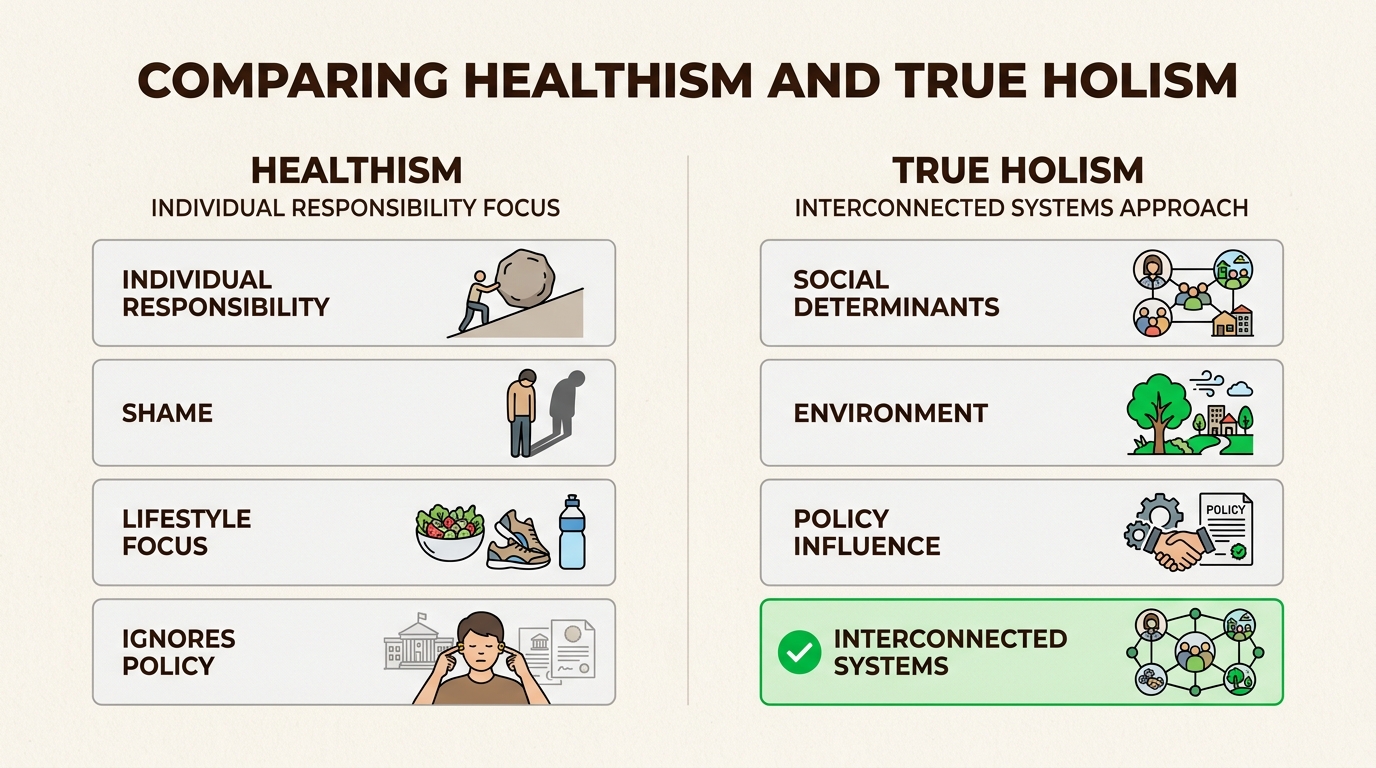
Let’s break it down. Sociologist Robert Crawford coined the term “healthism” in 1980 to describe the false belief that health is solely the responsibility of the individual via personal lifestyle choices (Source: Rowan + Sage). This ideology serves a dual purpose. First, it allows us to be shamed for our individual choices, making us desperate for “solutions” we can buy. Second, it ignores the social determinants of health, like economic stability and policy, which were shaped by the very corporations selling us the “fixes.”
The rise of the pharmaceutical industry in the 19th century was built on the back of this conditioning. Companies like Bayer launched their rise to power by patenting essential medications like aspirin, effectively monopolizing production and setting a precedent for the drug monopolies we see today. Between 1998 and 2015, pharmaceutical lobbyists (PhRMA) spent over $285 million influencing public officials to ensure that Western medicine remained the only “legitimate” path (Source: AJMC).
The result? Our connection to ancestral herbalism was systematically severed. We were taught to distrust the roots and leaves because there was no profit in them for the gatekeepers.
A recovering herbal medicine skeptic recently shared: “I realized I wasn’t being scientific. I was being obedient. I was trusting a system that profit-maximized my illness while ignoring the remedies that had worked for my grandmothers.”
Ripping the soil off the wellness industry: How grifters fuel the distrust of herbalism
I’m angry, and you should be too. But my anger isn’t just directed at “Big Pharma.” I’m equally furious with the wellness grifters who make it so easy for the corporate world to delegitimize us. When people see scams like “Breatharianism” (the dangerous belief that humans can live on light and air alone), they naturally recoil (Source: Wikipedia).
These “quick-fix” grifts’re the perfect smoking gun for those who want to keep us dependent on prescriptions. When a “guru” charges $100,000 for an “immortality workshop” or claims that Diet Coke and McDonald’s cheeseburgers are necessary to survive “3D pollution,” they’re doing the work of corporate lobbyists for them. They provide the extreme examples that allow mainstream media to paint all herbalism as a dangerous, anti-scientific cult.
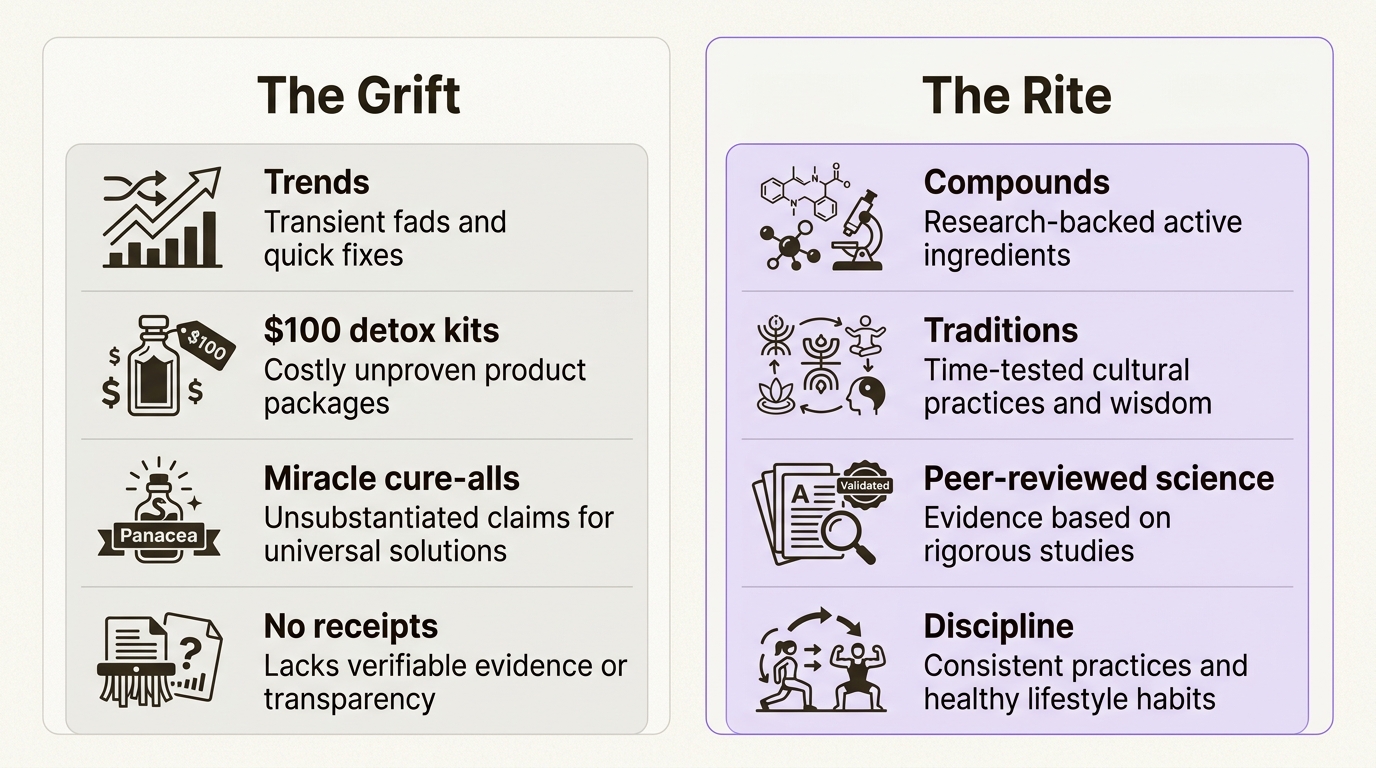
I believe in ripping the soil off this industry. We need to distinguish between “The Grift” and “The Rite.”
- The Grift: Trends, $100 detox kits, “miracle” cure-alls, and influencers who skip the receipts.
- The Rite: Compounds, traditions, peer-reviewed science, and the discipline to understand both.
We’re losing our humanity when we let these grifters define what it means to heal (Source: The Rooted Rite). Healing doesn’t come from trends. It comes from an inheritance passed down in leaves, roots, and ritual.
The science of ancient knowledge: Overcoming the distrust of herbalism with receipts
If you want to overcome the conditioning, you’ve to look at the receipts. Herbalism isn’t “woo-woo.” It’s a liberatory practice with a history of resistance. For example, enslaved African communities in the U.S. retained herbal traditions to reclaim their bodily autonomy in a system that treated them as property (Source: URGE). They used plants like cotton root to resist exploitation, maintaining knowledge that the established healthcare system tried to erase.
Even the modern “Wood Wide Web” shows us that plants are part of a sophisticated, communicative community (Source: Green Path Herb School). Underground mycorrhizal networks of fungi allow plants to alert their neighbors to danger and even funnel nutrients to younger or weaker plants. This isn’t poetry. It’s biological reality.
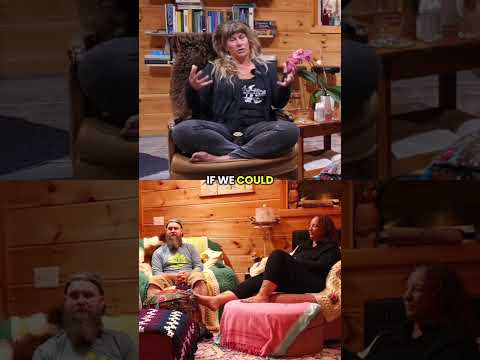
As shown in the video above, we often fail when we try to use herbs the same way we use pills. We ask “what herb is for IBS?” instead of asking “what is the pattern of my body?” Herbalism requires us to embrace complexity. It’s about understanding that no herb is a “miracle” for everyone, but every herb has a particularized miracle for the right body.
Reclaiming your inheritance: Moving past the distrust of herbalism in Colorado
That’s why I’m so passionate about what I want to do here in Colorado. We’re moving from “Materialism to Animism,” which’s a fancy way of saying we’re shifting from being consumers of “stuff” to being in reciprocity with the land (Source: Green Path Herb School). When you buy a handcrafted tea from a local Colorado herbalist instead of a mass-produced supplement from a big-box store, you’re making a political statement.
Supporting small businesses and local practitioners strengthens our community against corporate corruption. It brings us back to a place of human connection, which’s a fundamental “compound” in the medicine of herbalism. We’re neighbors, not data points. When we reconnect with the plants in our own backyards, we reclaim our birthright.
Start rooting yourself in truth today
This blog isn’t here to sell you crystals. I don’t have corporate sponsors. I just have roots, rites, and receipts (Source: The Rooted Rite). If you’ve felt that same eye-roll reflex, I invite you to share your story. Have you been burned by a wellness scam? Or have you had a breakthrough that modern medicine couldn’t explain?
Healing isn’t meant to be done alone. It’s about reconnecting with the earth and with each other. It doesn’t have to be extreme. It has to be aligned. Start rooting yourself in the truth that you’re more than a “broken machine.” You’re an interconnected part of a whole, and the remedies you need might just be growing right under your feet.
Frequently Asked Questions
Why is there such a strong distrust of herbalism in modern society?
The distrust of herbalism is often a product of conditioning by corporate and educational structures that benefit from the erasure of traditional plant knowledge in favor of profit-driven models.
How can I distinguish between a genuine herbal practice and a wellness grift?
A genuine practice will be rooted in both tradition and science (receipts) and won’t promise “miracle” quick fixes or require extreme, expensive investments. Genuine herbalism acknowledges complexity rather than ignoring it.
Does having a distrust of herbalism mean I am being anti-scientific?
Not at all. Often, our “scientific” skepticism is actually an obedient response to a system that has monopolized health knowledge. True science includes the study of plant compounds and their historically documented effects.
How does “healthism” contribute to our distrust of herbalism?
Healthism individualizes health responsibility, which leads to shame and frustration when lifestyle changes alone don’t work. This frustration is often turned toward herbalism rather than the systemic issues that make health inaccessible.
Can I use both modern medicine and herbalism without a distrust of herbalism?
Yes. Many modern practitioners and “recovering skeptics” find that a balanced approach, using peer-reviewed science alongside ancient rites, provides the most effective and aligned path to healing.
What role does Big Pharma play in the public’s distrust of herbalism?
Big Pharma has a long history of lobbying and influencing public consensus to favor synthetic, patented drugs over traditional plant medicine, which has systematically severed our connection to ancestral knowledge.
 The Rooted Rite
Leave a comment