Forget everything you have been told about sitting still and “clearing your head.” For those of us with ADD, that advice is not just unhelpful, it is often a recipe for a spiral of self-judgment and failure. I spent years trying to fit into the typical tradition of meditation. I sat on the expensive cushions. I listened to the apps telling me to watch my thoughts float by like clouds. But my thoughts were not clouds. They were more like a swarm of bees in a wind tunnel. The harder I tried to be still, the louder the buzzing became.
The truth is that the “quiet mind” is a luxury not everyone can afford. Before wellness became a multi-billion dollar industry, healing was not about perfect silence. It was about inheritance, passed down through leaves, roots, and ritual. We have lost that physical connection, and for the neurodivergent brain, that loss is particularly painful. We do not need a mental vacuum. We need a physical anchor.
That anchor is where the practice of meditating with herbal medicine changes the game. By activating your senses in a physical way, you can stop fighting your brain and start working with your nervous system. This is not about “woo” or “vibes.” This is about the discipline of understanding compounds and the ancient rites that root us in reality.
1. The failure of “quiet sitting” for the ADD mind
The typical meditation tradition usually centers on one thing: stillness. You are told to close your eyes, breathe, and let go. But for someone with ADD, sensory input is not a distraction to be avoided. It is a necessary signal. When we try to shut out the world, our brains compensate by ramping up the internal chatter. This is often called the “monkey mind,” a term used in Buddhist teachings to describe a restless and distracted state. While meditation is supposed to calm this, the traditional path often feels like an impossible task.
If you have ever felt exhausted and frustrated by your inability to “just sit there,” you are not alone. Traditional meditation often ignores the role of the body in mental regulation. For many, the physical act of being still actually increases anxiety. We need movement, texture, and sensory “pings” to feel present. Without them, we drift.
We believe that mindfulness should be an active rite, not a passive state. Instead of trying to suppress your thoughts, you can anchor them in the physical world. By engaging with the weight of a leaf, the sharp scent of a resin, or the bitter tang of a tincture, you give your brain a place to land. This is the difference between trying to hold your breath and finally learning how to breathe.
2. The science of sensory grounding
Why do physical pings like taste, touch, and smell work so well for neurodivergent brains? It comes down to how our nervous systems process information. For many with ADD, the “gatekeeper” in the brain that filters out irrelevant sensory data is a bit more relaxed than in others. This leads to sensory overload, but it also means we are highly responsive to intentional sensory input.
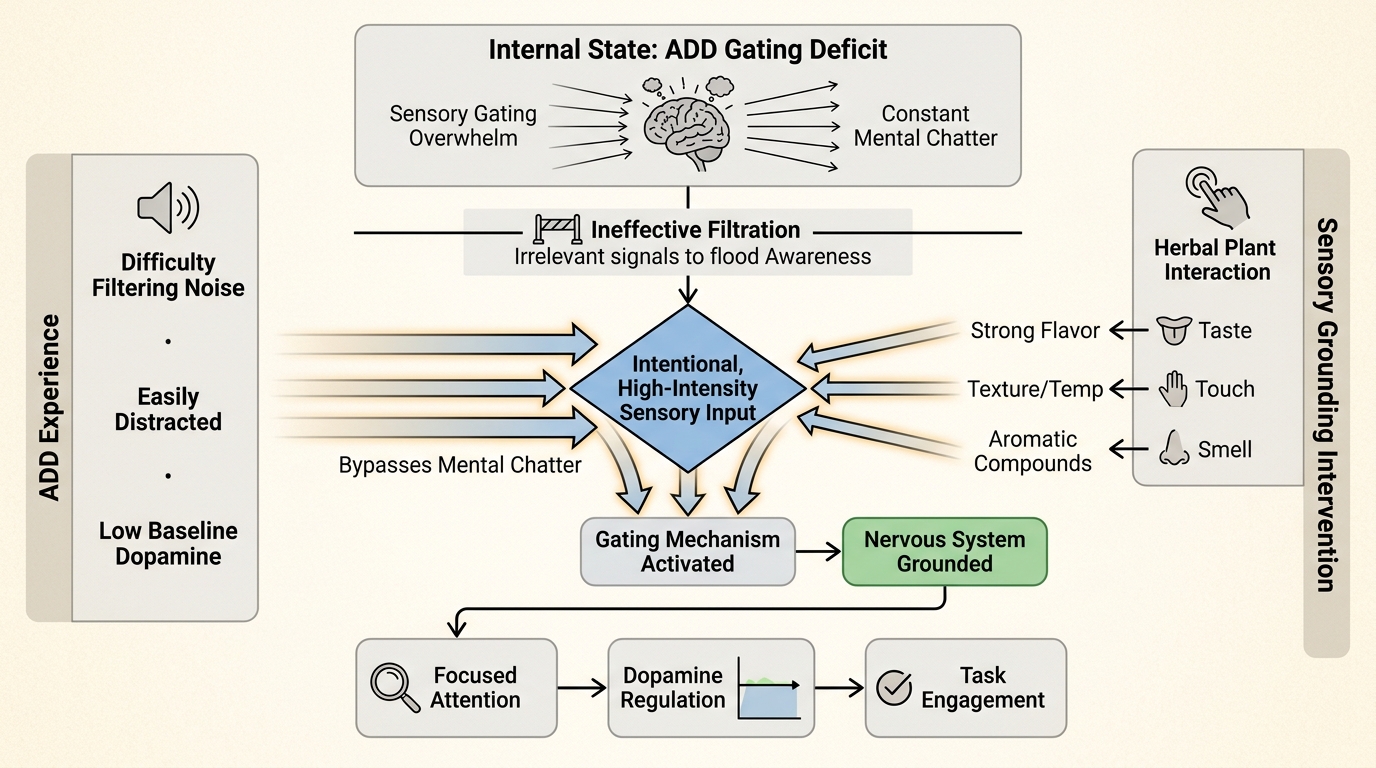
Grounding is a well-documented technique used to manage anxiety and focus. By integrating herbal medicine with meditation, we are essentially providing the brain with high-intensity “anchors” that demand attention. When you feel the jagged edges of a dried leaf or the cooling sensation of menthol, your brain prioritizes that incoming data over the internal loop of “What did I forget to do today?”
This physical activation helps regulate dopamine, the neurotransmitter often at the center of the ADD experience. Instead of seeking dopamine through digital distractions or racing thoughts, we find it through the sensory exploration of the natural world. It is about staying rooted in our physical selves at a time when we are losing our humanity to screens and systems that want us disconnected.
The key thing to remember is that you are not broken because you cannot sit still. You are simply built for a different kind of connection. Your brain wants to interact with the environment, not withdraw from it. By using plants as your partners, you turn meditation from a mental chore into a physical rite.
3. The sensory rite: Activating all five senses with plants
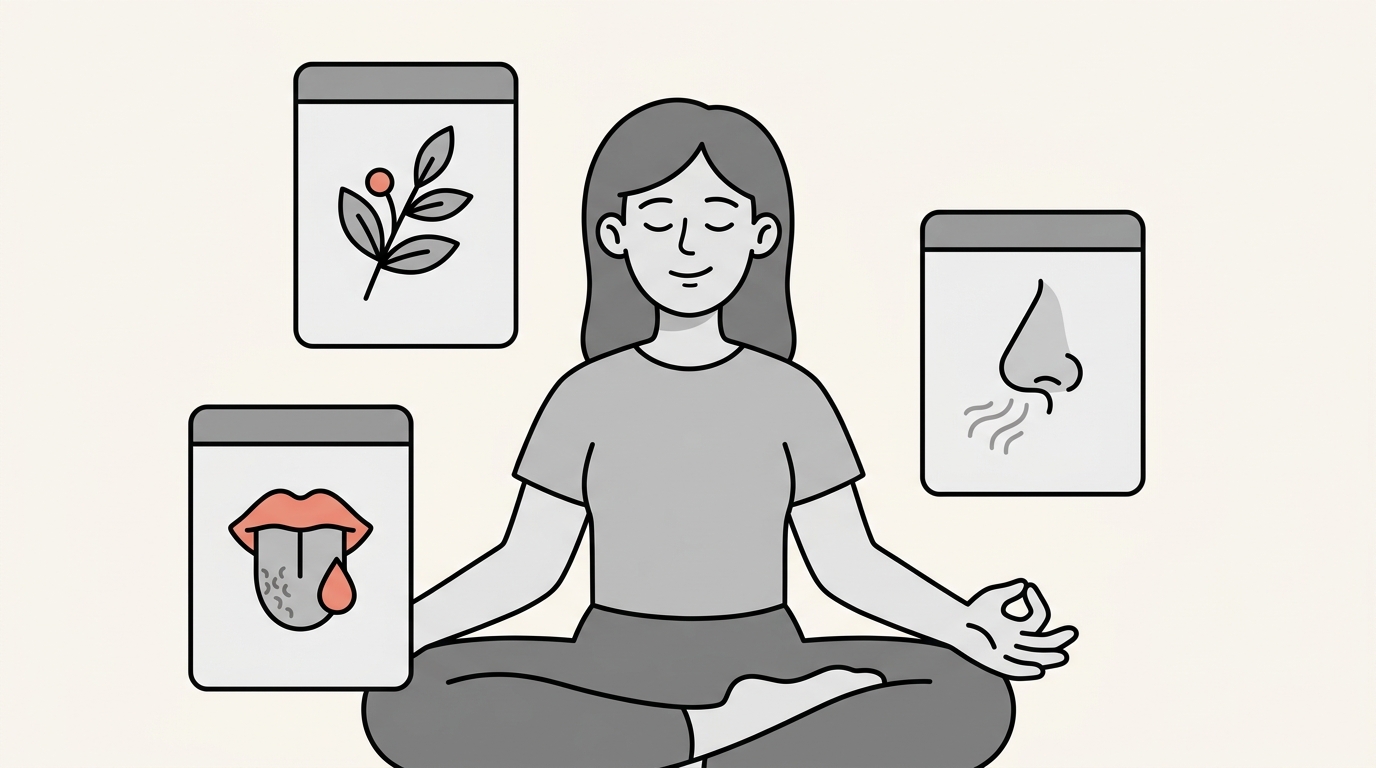
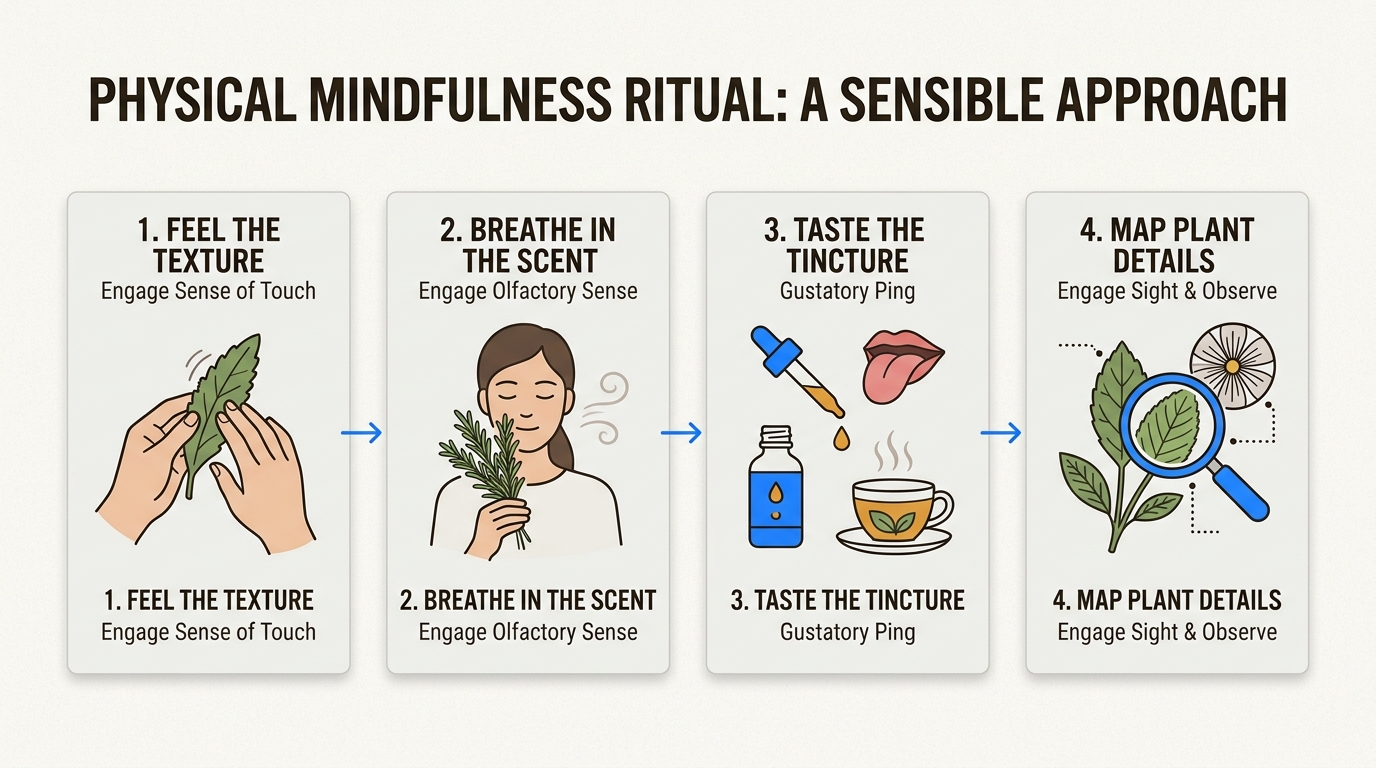
A sensory rite is about mapping the plant with your body. It is a slow, intentional process that leaves no room for the “monkey mind” to wander. Let’s break down how to engage each sense using herbal medicine.
Touch: The weight of the world
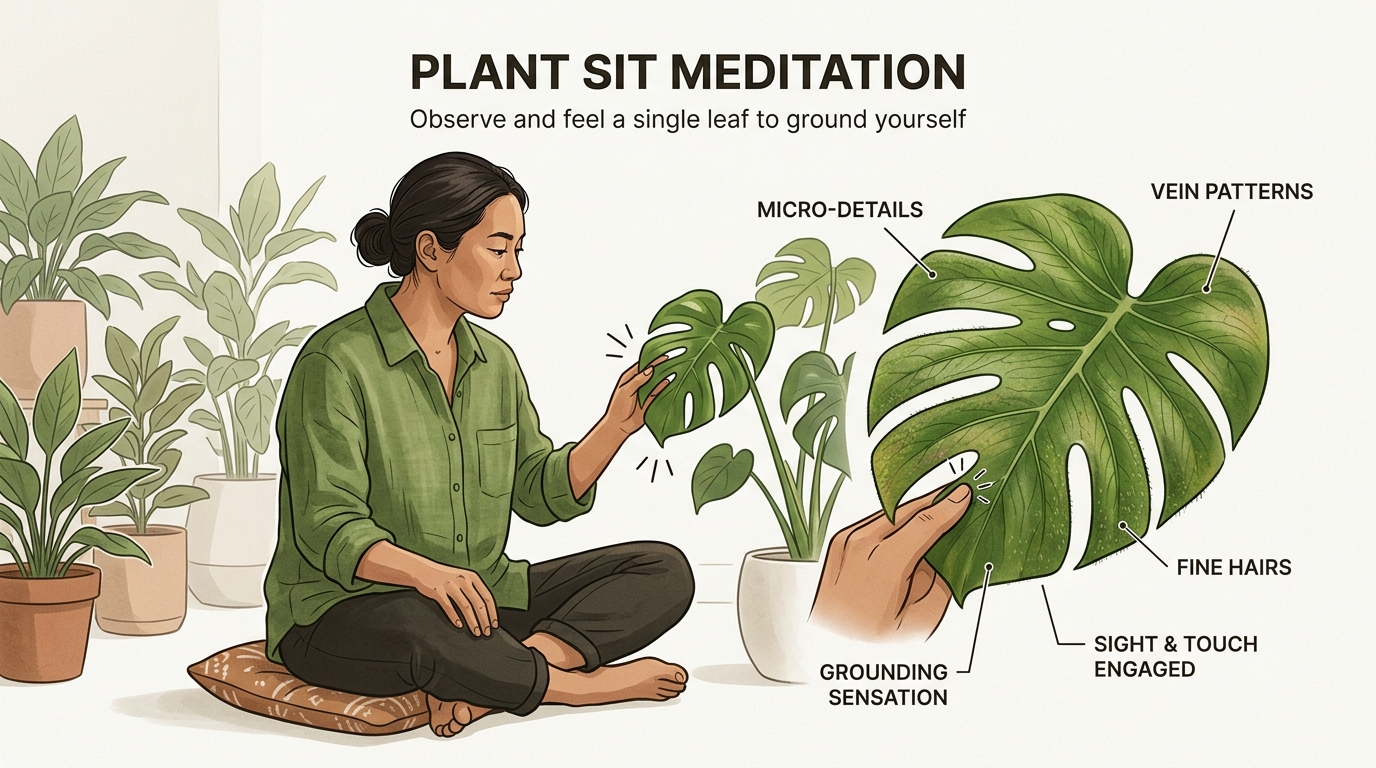
Touch is perhaps the most overlooked sense in meditation. Holding and feeling tea leaves or fresh flowers can be incredibly grounding. Notice the texture. Is it smooth, hairy, thin, or thick and fuzzy? As Commonwealth Herbs suggests in their plant sit technique, you should look for the smallest details: the veins deeply etched in a leaf or the tiny hairs on a stem. Feeling these physical realities pulls your awareness into the “now.”
Scent: The limbic shortcut
Scent is the only sense with a direct line to the limbic system, the part of the brain that handles emotion and memory. Aromatic compounds like terpenes can trigger immediate shifts in your nervous system. Whether it is the scent of lavender to quiet the mind or rosemary to sharpen focus, using aroma provides an instant “reset” button for a racing brain.
Taste: The sensory ping
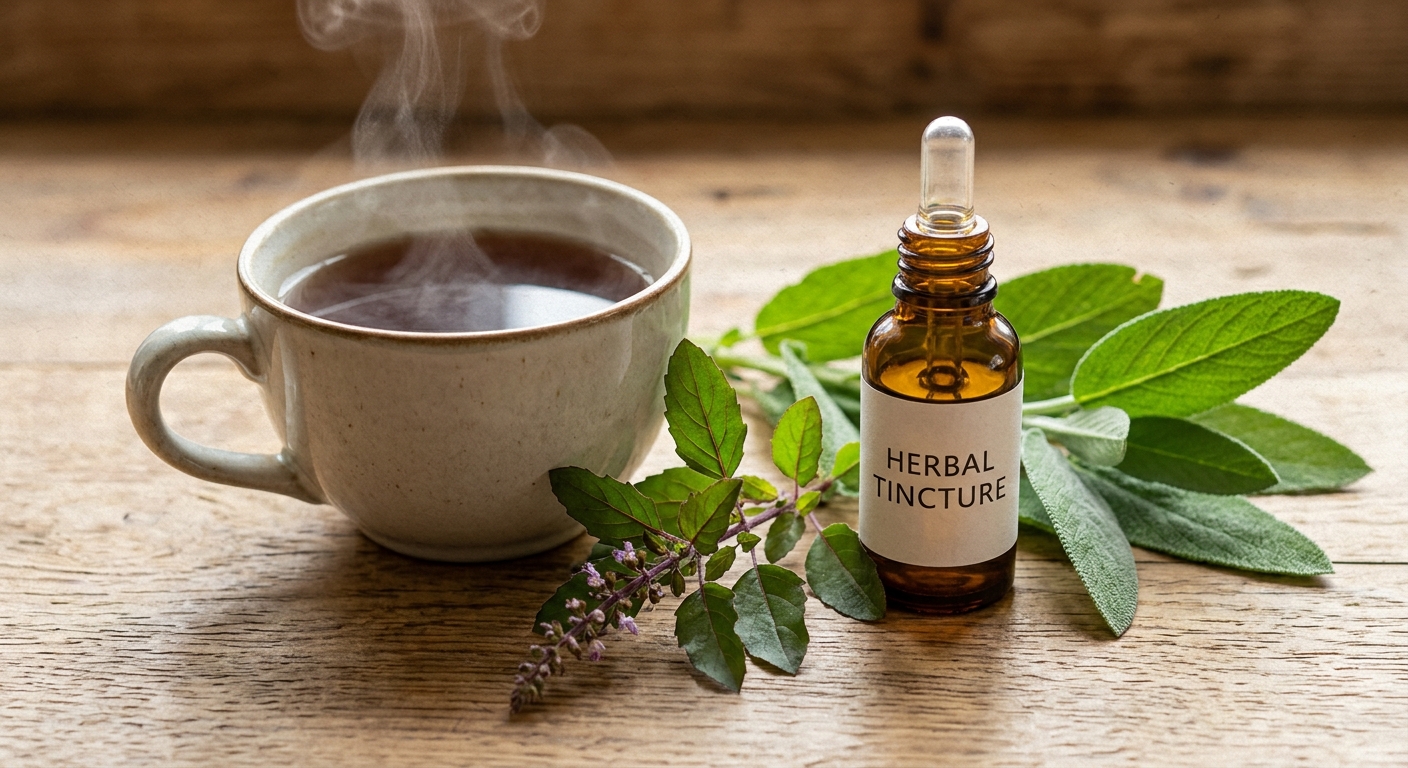
Tinctures and liquid extracts are perfect for providing a sharp, immediate focus. A single drop of a bitter or spicy extract on the tongue creates a physical sensation that is impossible to ignore. This “ping” serves as a reminder to return to the present moment. Unlike a pill you swallow and forget, a tincture is a taste-driven experience.
Sight: Visual mapping
Instead of closing your eyes, try “mapping” the plant in front of you. Observe the colors, the way the light hits the petals, and the geometry of the growth. This visual engagement keeps the ADD mind occupied with a complex, beautiful task, preventing it from seeking stimulation elsewhere.
4. Key herbal allies for sensory meditation
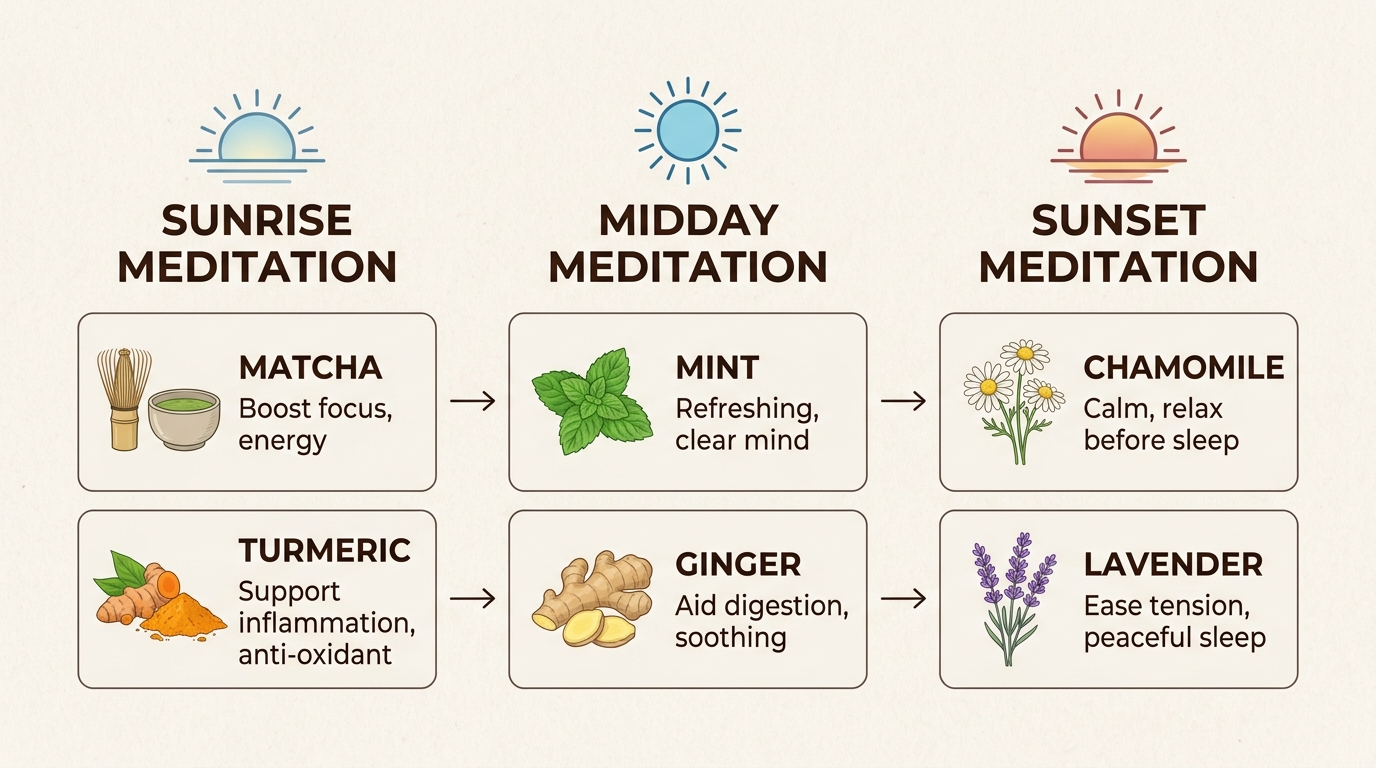
Choosing the right herbs for your practice depends on what your brain needs in the moment. Some herbs are better for focus, while others help with the emotional barriers to meditation.
Hawthorn
If you find yourself getting impatient or judgmental during meditation, Hawthorn is your ally. It is traditionally used for heart support, but in a sensory rite, it helps you go easy on yourself. It encourages the self-compassion needed to move through the frustration of a restless mind.
Sage and Frankincense
These resins are the heavy hitters of grounding. Their scents are deep and earthy, designed to clear mental clutter and provide a sense of spiritual purification. Handling raw resins and smelling their smoke or essential oil is a powerful way to signal to your brain that it is time to settle in.
5. Building your physical mindfulness ritual
Ready to start? You do not need a $100 detox kit or a room full of crystals. You just need a few basic tools and the willingness to engage with the physical world. Here is how the process works:
- Choose your anchor: Pick one herb and one format. This could be a liquid extract, a flower essence, or a handful of dried tea leaves.
- Engage the tactile: Spend two minutes just feeling the plant. If you are using a tincture bottle, feel the coolness of the glass. If you have leaves, feel their texture.
- Engage the olfactory: Close your eyes for a moment and breathe in the scent of the herb. Do not just “smell” it: try to identify the different notes (spicy, sweet, bitter).
- Engage the gustatory: Take your tincture drop or a sip of tea. Focus entirely on the sensation in your mouth. How does it change as you swallow?
- Engage the visual: Open your eyes and look at your plant or your tea. Map out three details you never noticed before.
Bottom line? This is about reclaiming your focus from the “wellness frauds” who want you to believe that healing is something you have to buy. Your backyard might save you if you just learn to look. We are here to help you dig into the real ancient rites of plant medicine, away from the grift.
6. Rooting in truth: Authenticity over trends
Healing does not come from trends. It comes from compounds, traditions, and the discipline to understand both. Meditating with herbal medicine is not a “quick fix.” It is a practice. It requires you to show up, get your hands dirty, and be willing to be wrong about what meditation is “supposed” to look like.
I’m tired of seeing people feel like they are failing at wellness because they do not have a quiet brain. We want to rip the soil off the industry and show you the roots. You do not need to be silent to be mindful. You just need to be present.
So, the next time someone tells you to clear your head, hand them a sprig of Tulsi instead. Root yourself in the truth of your own body. The plants are waiting.
Frequently Asked Questions
How do I start meditating with herbal medicine if I have never done it before?
Start simple. Pick one herb like Tulsi and spend five minutes engaging with its scent and taste before you try to sit still. The goal is to give your brain a physical anchor to focus on.
Can meditating with herbal medicine really help someone with ADD?
Yes. For ADD brains, sensory engagement is often more effective than traditional stillness. The physical pings from herbs provide the stimulation the brain needs to stay present and focused.
What are the best herbs for meditating with herbal medicine?
Tulsi is excellent for focus, Hawthorn helps with impatience, and Passionflower is great for physical restlessness. Choose the herb that addresses your specific barrier to meditation.
Do I need expensive equipment for meditating with herbal medicine?
Absolutely not. You can start with a simple cup of tea or a basic tincture. Our mission at The Rooted Rite is to move away from the commercial grift and return to authentic, accessible plant rites.
Is meditating with herbal medicine the same as aromatherapy?
While scent is a large part of it, this practice also includes touch, taste, and visual mapping. It is a full-sensory ritual designed to ground the nervous system more deeply than scent alone.
 The Rooted Rite
Leave a comment