
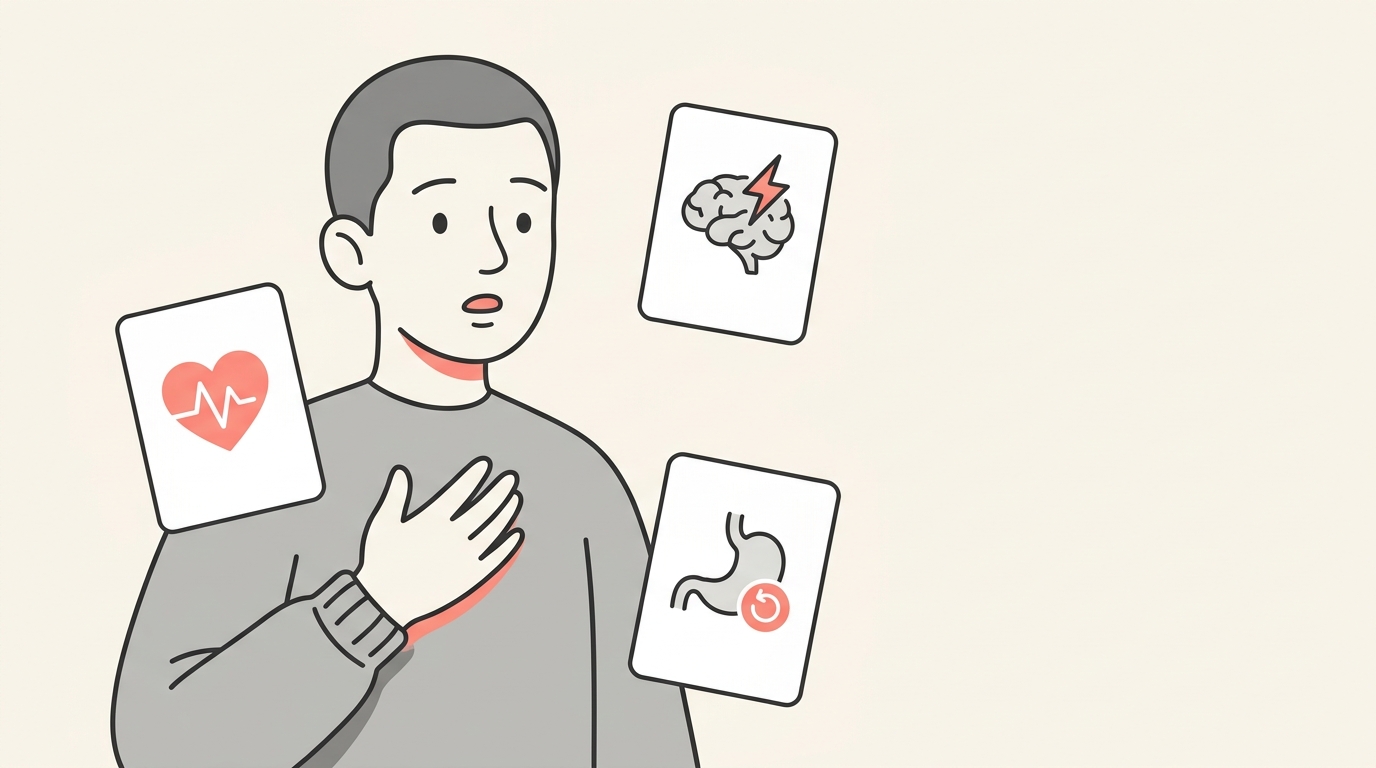
I never knew what it meant to “follow your intuition” until it dawned on me that it is a physical reaction before it is a mental one. For years, I listened to wellness gurus talk about intuition as if it were a shimmering psychic gift or a voice from the universe. It always felt a bit thin, a bit too convenient for people selling crystals. But when I started paying attention to my own body, I realized the “voice” of intuition isn’t a voice at all. It is a racing pulse. It is a cold sweat. It is that sudden, inexplicable drop in your stomach that happens a split second before your brain even identifies the problem.
At The Rooted Rite, I spend a lot of time ripping the soil off the wellness industry to find the actual roots. I believe that before wellness was an industry, it was inheritance, passed down in leaves, roots, and ritual. Intuition is part of that inheritance. It is not “woo,” it is a high-speed biological calculation.
If you have ever felt exhausted by the superficial trends of the modern healing world, you are in the right place. My name is Cristina, and I am a recovering skeptic. I want to help you understand that your body is not just a vessel for your mind; it is often the lead architect of your survival.
What is intuition? The iceberg of the unconscious
To understand the intuition physical reaction, we first have to define what intuition actually is. Joel Pearson, a neuroscientist and director of the Future Minds Lab at UNSW, has spent over 25 years studying this exact phenomenon. He defines intuition as the learned, productive use of unconscious information for better decisions or actions.
Think of your brain as an iceberg. The tip sticking out of the water represents your conscious mind, the part that does math, writes emails, and decides what to have for dinner. But the vast majority of the iceberg is concealed underwater. This is your unconscious mind, and it is processing an astronomical amount of data every second.
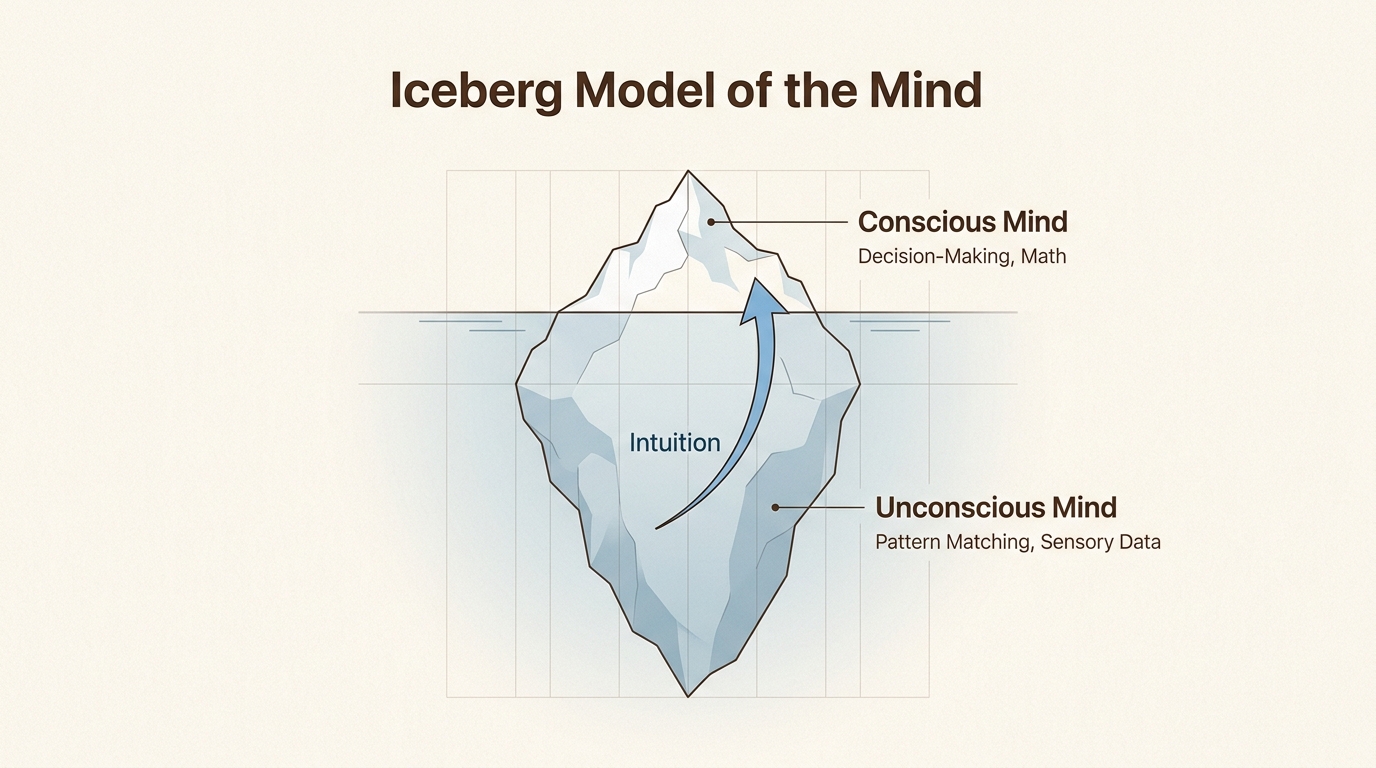
While you are walking down a street, your conscious mind might be thinking about a meeting. Meanwhile, your unconscious is processing the lighting, the shadows, the pace of the person behind you, and the way the air feels. Intuition is the process of your brain surfacing that “underwater” data to the tip of the iceberg.
It is important to distinguish this from the “psychic” claims often found in the wellness industry. The Rooted Rite exists to bridge the gap between ancient rites and peer-reviewed science. I have seen how the commercialized wellness industry wants you starving for truth while they sell you “Breatharian” gurus who sneak snacks when the cameras are off. You can read more about that in our deep dive into the roots of truth.
The intuition physical reaction: Why your body speaks first
The most fascinating part of the intuition physical reaction is the timing. Your body often reacts before your conscious mind even knows there is something to react to. This is not a metaphor; it is a biological fact rooted in how our brains process threats.
When you encounter a potential danger, the information reaches your amygdala, the emotional processing center of the brain, much faster than it reaches your visual cortex. In one famous experiment at the Future Minds Lab, researchers showed participants images of snakes or spiders but suppressed them so the participants never “saw” them consciously. Even though the mind was unaware, the body reacted. Heart rates went up. Palms started to sweat. The emotional brain was responding to the threat before the conscious mind had a chance to name it.
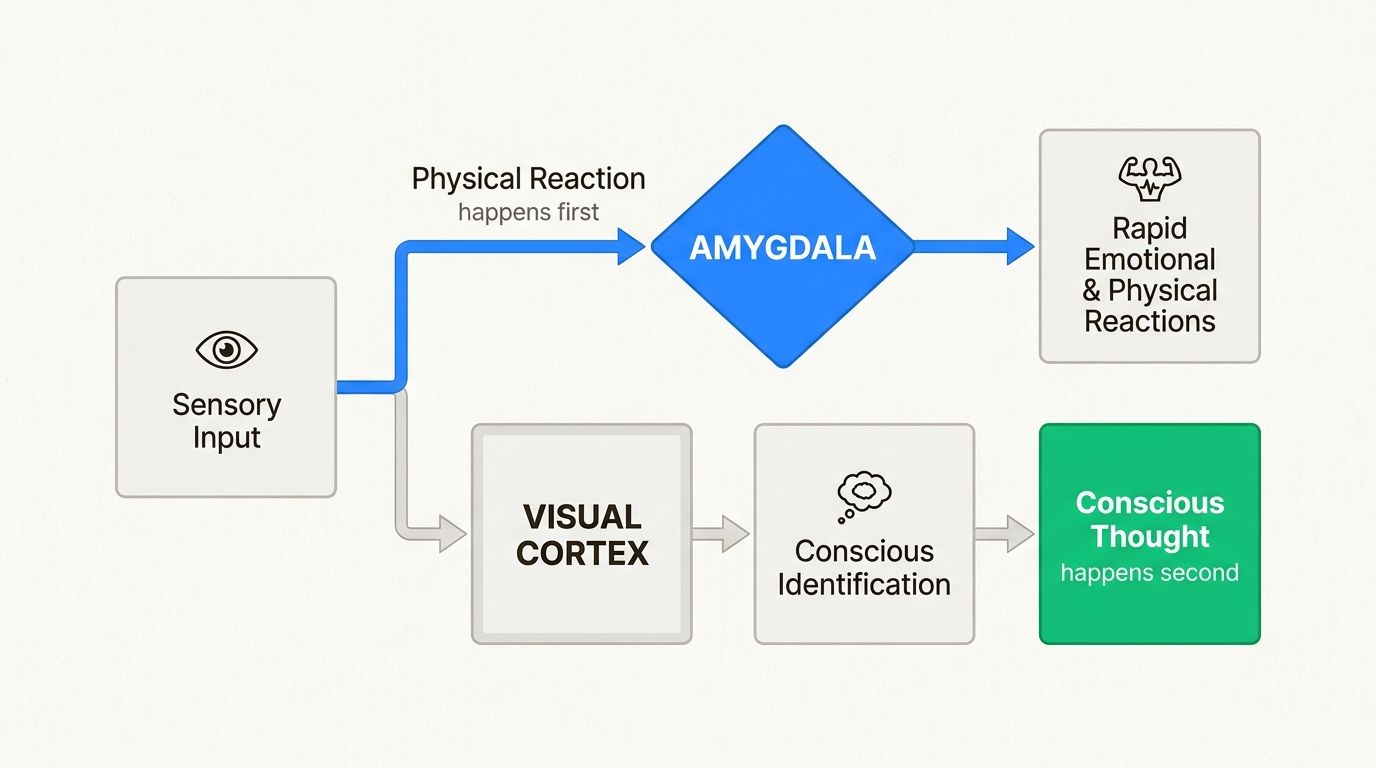
This is the biological “pre-signal.” Your body is sending you a receipt of a calculation it just finished. Here is how the key brain regions work together:
- The Amygdala: Processes emotional stimuli and shapes instinctual reactions.
- The Insula: Integrates bodily sensations with environmental cues to create “gut feelings.”
- The Ventromedial Prefrontal Cortex: Evaluates the significance of your feelings and helps you decide how to respond.
Joel Pearson explores this in his book, The Intuition Toolkit. He describes it as the “science of knowing what without knowing why.” It is a tool honed over thousands of years of human evolution, designed to keep us alive in environments where a second of hesitation could be fatal.

Interoception: Decoding your body’s alarm system
The technical term for this intuition physical reaction is interoception. It is the internal perception of the state of your body. Most of us are familiar with the obvious signals (hunger, thirst, or needing to use the bathroom) but interoception also includes the subtle shifts in our nervous system.
When you are about to make a choice, your internal systems are constantly being monitored. If you feel a sudden sinking feeling in your stomach or a tightening in your chest, that is your nervous system giving you insight. This communication happens via the gut-brain axis, a physical superhighway of neurotransmitters like serotonin and the vagus nerve.
The “gut feeling” can manifest in several ways:
- Tight shoulders or neck tension
- A sudden drop or “flutter” in the stomach
- Goosebumps or a shiver down the spine
- An increase in heart rate or shallow breathing
Interestingly, some people are more naturally “in tune” with these signals than others. Some can sit quietly and tap out their own heartbeat, while others have no idea. But regardless of your natural sensitivity, interoception is a skill that can be practiced. It is about learning to notice the physical receipt before the mental story starts.
Mastering the signal: The SMILE framework
Just because your body is reacting doesn’t mean you should always follow it blindly. One of the biggest mistakes the wellness industry makes is telling you to “always trust your gut.” The truth is more nuanced. Sometimes your gut is wrong. Sometimes it is just anxious.
Joel Pearson developed a toolkit to help us distinguish between real intuition and noise. He uses the acronym SMILE to define when it is safe to listen to that intuition physical reaction:
S: Self-awareness
Are you in a high emotional state? If you are extremely angry, terrified, or even over-the-top excited, your intuition is compromised. High emotion acts like static on a radio. If the signal isn’t clear, don’t trust it.
M: Mastery
Intuition is a learned process. You cannot have “intuition” about a subject you know nothing about. If you have played tennis for twenty years, you can intuit where the ball will land. If it is your first day on the court, that feeling in your gut isn’t intuition; it is just a guess.
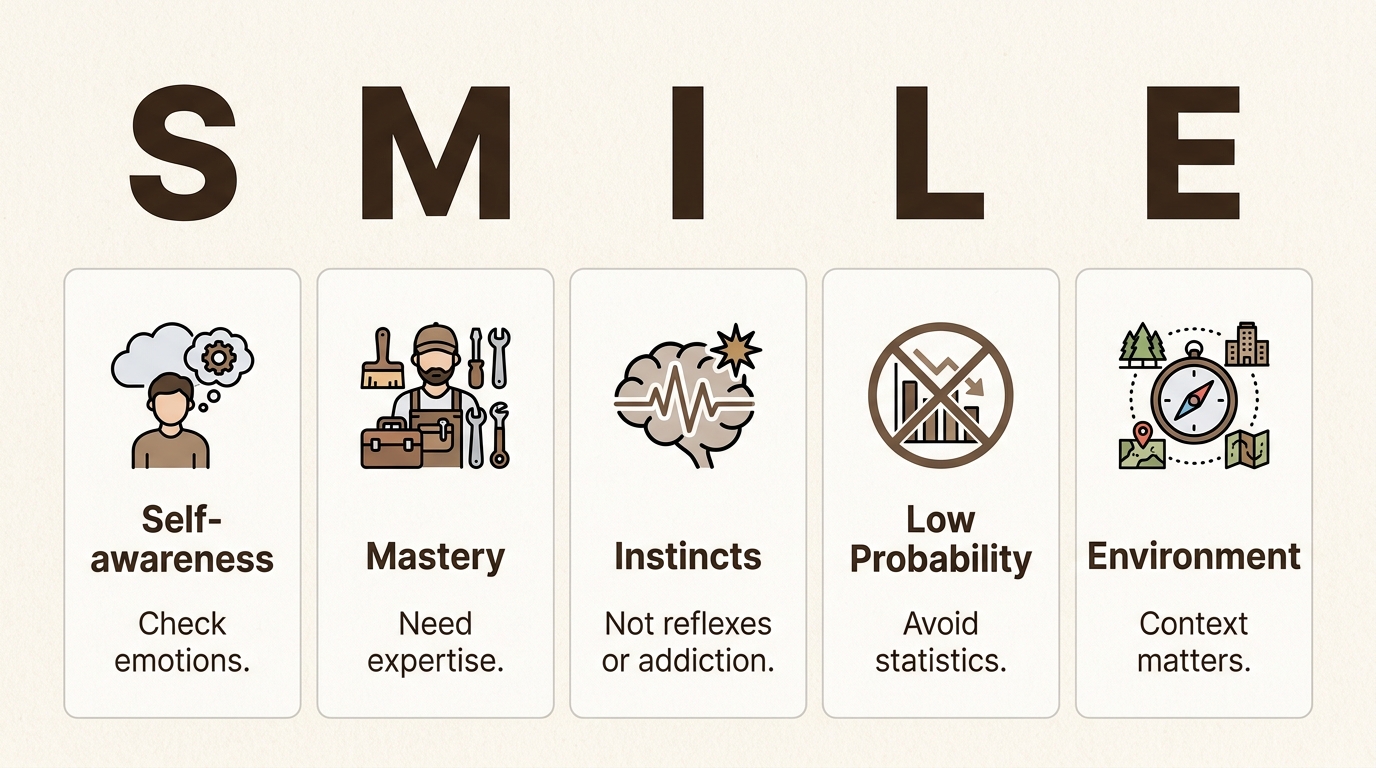
I: Instincts and addiction
Reflexes (like pulling your hand away from a flame) are not intuition. Neither are addictive cravings. The “pull” toward a cigarette or a gambling app can feel like a gut instinct, but it is actually your brain’s reward system being hijacked.
L: Low probability
Our brains are terrible at statistics. We fear shark attacks even though they are incredibly rare, but we don’t feel “intuitive” danger while driving, which is far more dangerous. If the decision involves math or probability, don’t “feel” your way through it. Use a calculator.
E: Environment
Intuition is context-specific. The signals you learned in a safe, quiet suburb will not work if you are navigating a busy market in a foreign country. If you are in an unfamiliar environment, your “iceberg” doesn’t have enough data to make a reliable calculation.
Intuition physical reaction vs. trauma triggers: Identifying the grift
One of the most dangerous things a wellness “guru” can do is tell a trauma survivor to “just trust their gut.” For someone with complex trauma or CPTSD, the nervous system is often stuck in a state of hypervigilance. Every minor change in a partner’s tone or a friend’s facial expression can feel like a life-or-death emergency.
In these cases, the intuition physical reaction is distorted. It isn’t a prediction of future danger; it is a memory of past danger. Distinguishing between a trigger and intuition is a vital part of reclaiming your humanity.
| Quality | Intuition | Trauma Trigger |
|---|---|---|
| Physical Feel | Steady, quiet, subtle | Intense, overwhelming, loud |
| Emotion | Calmer, even if urgent | Panic, anger, helplessness |
| Context | Based on the present moment | Based on past experiences |
| Outcome | Usually protective | Often leads to “fight, flight, or freeze” |
The wellness industry often exploits this confusion, selling “healing” that is just a polished version of the same grift. They want us divided, distracted, and dependent on their latest $100 detox kit. But at The Rooted Rite, I believe that real healing comes from understanding the discipline of our own biology. We are losing our humanity to corporate corruption and the “faceless giants” that run our economy, but we can find it again by rooting ourselves in truth. You can read more about how we are losing our humanity and why it matters.
Rooting yourself in truth: How to start listening
The next time you feel a “gut feeling,” stop looking for the voice in your head. Start looking for the nervous system receipt in your body. Ask yourself if you are in a high emotional state, if you have mastery over the situation, and if the environment is familiar.
If the conditions are right, that intuition physical reaction is one of the most powerful tools you have. It is an inheritance of survival that has been passed down through generations. It is the “compound” of thousands of years of human experience.
At The Rooted Rite, I’m not here to sell you crystals. I’m here to help you dig into the ancient rites of plant medicine and the receipts of peer-reviewed science. Whether it is understanding your nervous system or learning why supporting small businesses is the only way to save our local economies, we are dedicated to the truth.
Frequently Asked Questions
What does a typical intuition physical reaction feel like in the body?
A common intuition physical reaction manifests as subtle physiological shifts like a sudden drop in the stomach, an increased heart rate, or a tightening in the chest. These signals are produced by the nervous system before the conscious mind has fully processed the situation.
Can you train your body to have a more reliable intuition physical reaction?
Yes, you can improve your intuition physical reaction by practicing interoception, which is the ability to perceive internal bodily signals. Developing mastery in a specific subject also helps your brain build the ‘unconscious database’ needed for accurate intuitive responses.
How do you tell the difference between anxiety and an intuition physical reaction?
Anxiety usually feels loud, frantic, and is often accompanied by racing thoughts and panic. A true intuition physical reaction tends to be quieter and more steady, providing a sense of ‘knowing’ even if the signal itself is urgent or alerting you to danger.
Why does a biological intuition physical reaction happen before we are consciously aware?
The brain’s emotional center, the amygdala, can process incoming sensory data much faster than the visual cortex can identify it. This allows the body to trigger an intuition physical reaction as a survival mechanism before you even ‘see’ the threat.
Should you always trust your intuition physical reaction in a new environment?
No, you should be careful about trusting an intuition physical reaction in unfamiliar settings. Joel Pearson’s SMILE framework notes that intuition requires environmental familiarity and mastery to be reliable.
 The Rooted Rite
Leave a comment